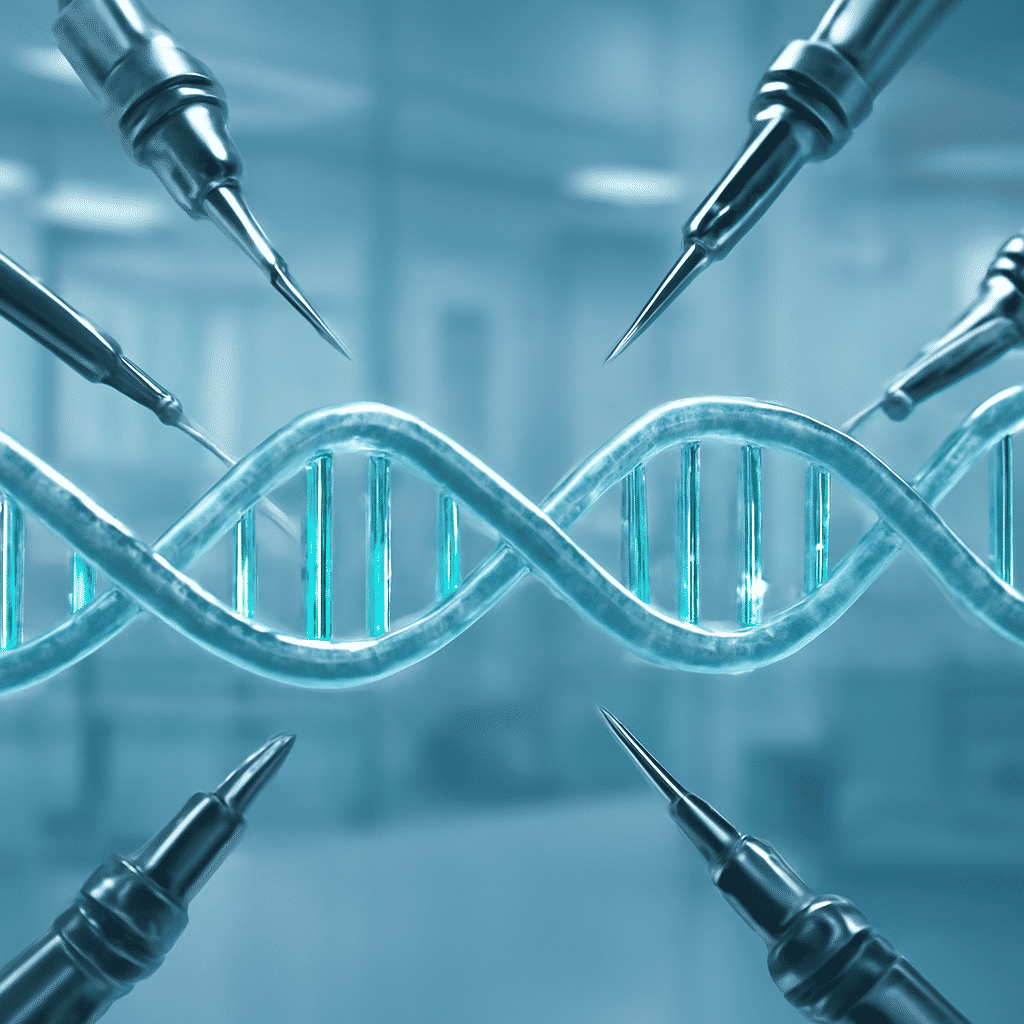
Genome editing has emerged as one of the most transformative technologies in the field of biological sciences, providing unprecedented capabilities in modifying genetic material with high precision. At the forefront of this revolution is the groundbreaking CRISPR-Cas9 system, along with other innovative approaches, that are opening new avenues for enhancing gene functionality and combating genetic disorders.
CRISPR, which stands for Clustered Regularly Interspaced Short Palindromic Repeats, has captured significant attention since its potential was unlocked in the early 2010s. This system, derived from a bacterial defense mechanism, allows scientists to target specific DNA sequences and introduce breaks in the DNA strand. The natural repair processes of the cell can then be harnessed to correct mutations, turn genes on or off, or even insert new genes. CRISPR's simplicity, efficiency, and cost-effectiveness have made it a preferred tool among researchers across various disciplines.
Beyond CRISPR, several other genome editing technologies have been developed, each with unique capabilities and applications. Zinc Finger Nucleases (ZFNs) and Transcription Activator-Like Effector Nucleases (TALENs) were among the earliest genome editing tools, providing the ability to create site-specific modifications. These methods involve engineered proteins that bind to specific DNA sequences, enabling targeted DNA cleavage. Although these techniques paved the way for genome editing, CRISPR superseded them due to its ease of design and scalability.
More recent innovations in genome editing technology include Base Editing and Prime Editing. Base Editing allows for the precise conversion of one DNA base pair into another without causing double-strand breaks, offering an even more refined approach for correcting point mutations associated with genetic diseases. Prime Editing expands the toolkit further by enabling more complex edits, such as precise DNA insertions and deletions, providing the possibility for a wide range of genomic alterations that were previously challenging to achieve.
The applications of these genome editing technologies are vast and far-reaching. In agriculture, they promise the development of crops with enhanced nutritional content, increased resistance to pests and diseases, and improved adaptability to environmental changes. In medicine, genome editing holds the potential to revolutionize the treatment of genetic disorders, offering curative therapies for diseases like cystic fibrosis, muscular dystrophy, and sickle cell anemia. Moreover, genome editing is paving the way for groundbreaking cancer therapies by enabling the engineering of immune cells to better recognize and attack tumor cells.
While the potential benefits of genome editing are immense, they are accompanied by ethical and safety considerations. The possibility of off-target effects, where unintended parts of the genome are edited, poses a risk that necessitates rigorous validation and control measures. Additionally, the ethical implications of genome editing, especially in germline cells that can be passed to future generations, require careful deliberation and consensus among scientists, ethicists, policymakers, and the public.
As research in genome editing continues to advance at a rapid pace, it is crucial to develop a framework that guides its application responsibly. This involves ensuring equitable access to the benefits of these technologies, maintaining transparency in research and development processes, and fostering public discourse to address societal concerns.
In conclusion, genome editing technologies represent a monumental step forward in our ability to understand and manipulate the fundamental codes of life. As we stand on the brink of new possibilities, balancing the promise of these innovations with ethical considerations will be key to harnessing their full potential for the betterment of humanity.